
Eine Zeitreise in die Erdgeschichte im österreichisch-mährischen Grenzgebiet (GeoTT)
EU Interreg project: Geo Time Travel
Project no: ATCZ00013
Project acronym: GeoTT
Interreg AT/CZ thematic priority: education, culture and tourism
Project duration: 1 February 2024 – 31 January 2027
Project partners: Natural History Museum Vienna (NHMW) (lead partner), Fossilienwelt Weinviertel in Stetten, Moravské zemské muzeum (MZM) in Brno
The project is co-funded by the European Regional Development Fund (ERDF).
Project budget (total): € 986,422.81
Project budget (Fossilienwelt): € 499,562.60
Amount of ERDF co-financing awarded to Fossilienwelt: € 399,650.08
Project goals
The Austrian-Moravian border region boasts a wealth of geological evidence. This makes it possible to experience the development of this landscape over a period of 380 million years in a geographically small area. The sites of finds include bizarre reefs from the Palaeozoic era and tropical lagoons from the Mesozoic era, as well as the inhospitable steppe where mammoths used to roam during the Ice Age.
The INTERREG ATCZ00013 GeoTT project allows us to travel back in time and experience physical and digital evidence of these bygone habitats. This time travel is organised as a one- or two-day trip in the region between Vienna and Brno and offers a completely new way of experiencing this region.
Project results
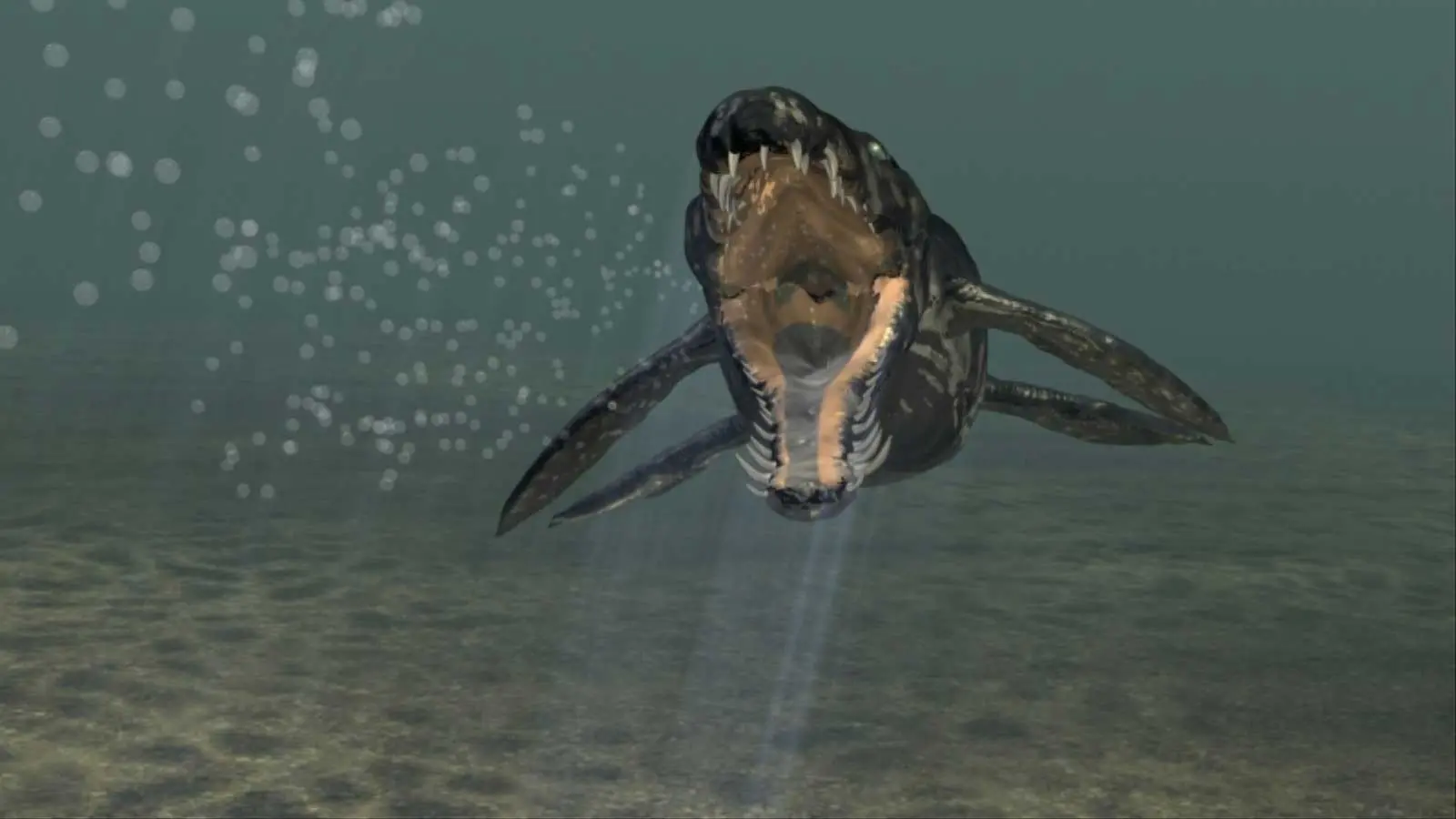
The project will lead to diverse results. There will be interactive stations and animated videos at all three partner institutions. 17 information panels will mark the most important sites between Vienna and Brno. The project will also include a smartphone application which creates a link between the different sites and allows users to experience virtual worlds that recreate the bygone habitats and the alien organisms that used to dwell there. This digital element facilitates an accessible experience independent of a user’s location.
An 11-metre LED wall showing an installation of the Ars Electronica Futurlab at the Natural History Museum Vienna enables visitors to immerse themselves in virtual worlds. A huge mobile plotting table with a built-in scan station makes it possible for users to actively design different virtual worlds that are then directly displayed on the LED wall.
Fossilienwelt Weinviertel will attract young visitors with a new adventure playground and inspire them to learn more about the geological past. A giant shark to climb on and a snail and shell forest with slides and net tunnels allow youngsters to playfully immerse themselves in the tropical world that prevailed in Lower Austria 16.5 million years ago. The evolution of life is illustrated along a 48-metre interactive timeline.
The Moravian Museum also shows animations of worlds that no longer exist. A digital microscope allows visitors to look at fossils from a completely new perspective. A model of the jawbone of the giant shark Otodus megalodon, whose teeth were found in the tertiary sediments throughout the region, will be the museum’s major attraction.
The project results in closer cooperation between the Natural History Museum Vienna, the Moravian Museum and Fossilienwelt and their teams, which will make it possible to attract new groups of potential visitors. The project allows the partner institutions to significantly increase their visibility as well as public interest in scientific research. Furthermore, the project is expected to have a positive impact on the development of tourism in the Austrian-Moravian border region.





